


News
NEWS CENTER
Those hidden in the food packaging of harmful substances, more harmful than the problem of food!
Release time:
2023-01-03
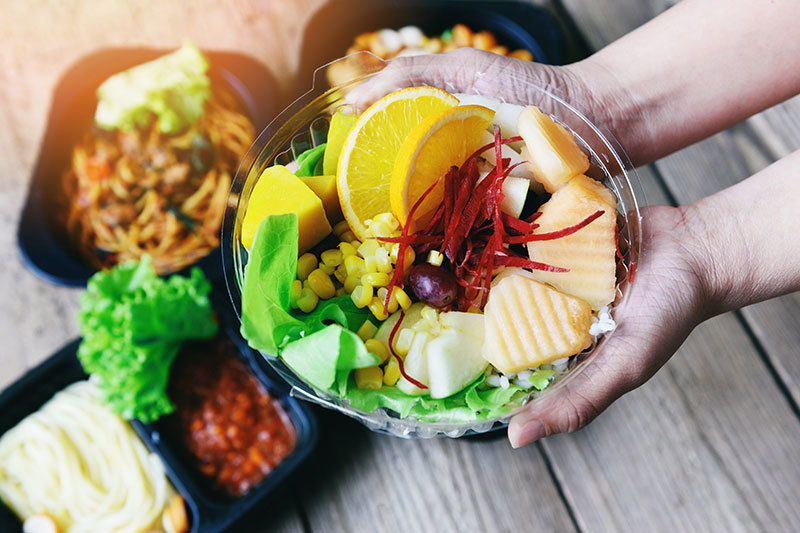
Think back to what you ate today. Maybe you drank bottled juice, made coffee, drank fruit yogurt, or ate salad. No matter what it is, it is always inevitable that the food we eat is probably packaged in plastic.
Think back to what you ate today?
Maybe you drink bottled juice, make coffee, drink fruit yogurt, or eat salad. No matter what it is, it is always inevitable that the food we eat is probably packaged in plastic.
Plastics can make it easier to pack, store, heat or serve food, and unfortunately, there is growing scientific evidence that these plastics start to harm our health throughout our lives from the mother's womb.
From bottles to aluminum can linings to plastic packaging and salad boxes, most food containers are made of polycarbonate plastic, and some contain bioactive chemicals such as bisphenol A(BPA) and phthalates.
These man-made chemicals can leach from the container or packaging and become incorporated into the food and beverage it holds, even more so when heated. At the beginning of 2018, studies showed that 90% of the bottled water of the world's famous brands contained microplastic pollutants, which led to the World Health Organization's review of the potential risks of plastics in drinking water.
The main reason for this concern is that such chemicals interfere with our hormones.
Specifically, they can mimic hormones such as estrogen, interfere with the thyroid's vital hormonal transmissions, and inhibit the effects of testosterone.
Hormones are essential to the body's ability to self-regulate. They are like little messengers, floating in the blood, triggering different organs and systems to work in harmony. Imagine eating foods that resemble the structure of hormones in the body, which begin to work like hormones and end up disrupting the delicate balance that the body needs to maintain. The trace chemicals contained in plastics can have such consequences after years of ingestion by the human body.
Because we are exposed to these chemicals from multiple sources at the same time, it is difficult to measure their specific risks to human health. Nevertheless, there is conclusive evidence that their "endocrine disruption" characteristics will have a series of effects on human health, such as increased risk of obesity and diabetes, and reproductive development problems.
"For a developing fetus or child, even in very low doses, these pollutants may cause their organs or systems to mutate in subtle but important ways." The Environmental Defense Fund (Environmental Defense Fund) chemical policy director Tom Neltner (Tom Neltner) said.
That's why, in July 2018, the American Academy of Pediatrics (American Academy of Pediatrics,AAP)
Called on American families to minimize the use of plastic containers for food storage, and asked the U.S. government to introduce policies to regulate the use of plastic materials and change. AAP believes that "this need is very urgent", but until now, it has not been.
As the pediatrician advises, we may need to think twice when choosing to store food in plastic containers. Here are four facts we need to know.
The complex results of plastics and animal health science are worrying.
The scientific community has been studying the potential impact of chemicals contained in plastics commonly used in food storage on animals and humans. Depending on the type of plastic polymer, its impact on health also varies from indecisive to disturbing.
First, let's review some animal research results. When conducting animal tests, researchers can fully grasp the type and dose of chemical substances and study their effects on animal health, which cannot be done in human trials. The first is the most feared plastic polymer: bisphenol A(BPA).
Aquatic animals are important simulation objects of human diseases. BPA disrupts its hormones in many ways, including mimicking estrogen, blocking other sex hormones, and disrupting the thyroid hormone system. Researchers have noticed that BPS, a compound very close to bisphenol A in structure, has similar effects on aquatic animals.
A 2012 study conducted by Harvard University researchers explored the effects of BPA on the development of rhesus monkey oocytes (oocytes are the precursors to female eggs). By feeding monkeys BPA directly, or implanting a substance that can release a specific dose of BPA in monkeys, and at the same time exposing monkeys to the same plastic pollution as the human body, it was eventually discovered that there were two key stages in the development of their eggs. Interference may lead to reduced egg quality and reduced fertility.
A 2008 meta-analysis of the existing literature specifically examined the effects of phthalates and polyvinyl chloride (polyvinyl chloride,PVC) on asthma and allergies. The researchers pooled data from mouse studies, pathology studies and epidemiology. While the human data were inconclusive, it emerged from this analysis that certain phthalates caused an inflammatory response in mice.
A review published in 2009 reviewed the existing literature on how plastic ingestion affects humans and animals. The review illustrates a series of effects observed in recent years: functional impairment of sperm development in adult male rats fed phthalates, and testicular damage in mice and guinea pigs fed phthalates.
One of the authors of the review, Frederick Vom Saal, an endocrinologist and professor emeritus at the University of Missouri (University), explains that many animals ingest particularly high doses of plastic chemicals, orders of magnitude higher than those exposed to humans, which is one of the biggest problems in animal research. The reason is that much of the early research on plastic consumption was conducted by toxicologists, not endocrinologists.
When it comes to toxins, the more human exposure, the greater the impact. But that's not the case with hormones, "says Vorm Sal." Hormones are not toxins, but regulatory molecules that operate at the trillion-gram level."
In fact, hormones, and the plastics that mimic them, are part of a complex feedback system in the human body, and dose does not exhibit a direct linear effect. In a 2012 study, Saar and colleagues found that the dose of diethyl phthalate (DEHP) contained in food packaging produced adverse reproductive effects at levels 25000 times lower than previously thought. They also noticed that male offspring of mice fed with DEHP oil developed symptoms of genital tract malformations.
In conclusion, animal studies have shown that plastic products can be harmful, especially to the reproductive system of animals, and may cause abnormal sperm, egg and fetal development.
Human data is not yet sufficient to draw conclusions
Again, the health problems that occur in animals are not necessarily present in humans, because humans and animals are still different. Few studies have reached accurate conclusions about the impact of plastic pollution on human health. This is because the research focuses on epidemiology, where researchers can only explore the relationship between plastic pollution and certain health symptoms. In other words, they can't figure out cause and effect.
There is also a problem: it is often difficult to accurately determine what chemicals are contained in the packaging, because the process of making plastic polymers produces many by-products at the same time, and these products are not necessarily tested for safety. This means that it is difficult for researchers to design studies to understand the effects of any single chemical.
Even so, Carl-Gustaf Bornehag, researcher and professor at the Icahn School of Medicine at Mount Sinai, concludes: "There have been numerous studies showing the health effects of plastic-related chemicals, such as bisphenol A in polycarbonate and phthalates in soft polyvinyl chloride. The same is true for experimental cell and animal studies, which makes us more confident that it has adverse effects on humans."
A review of the literature on the effects of plastic chemicals on human health shows that bisphenol A, phthalates and other plastic additives can lead to reduced human fertility, reduced male sexual function and sperm quality, weakened immune function, type 2 diabetes, cardiovascular disease and obesity. For the fetus, exposure to BPA is associated with an increased risk of miscarriage, low birth weight and childhood obesity.
At the same time, these plastic chemicals may also have an impact on cognition. "Early BPA exposure was strongly associated with behavioral changes and neurodevelopmental disorders in children, childhood wheezing, and an increased incidence of asthma," said one of the review authors." Indeed, children's physical health is particularly vulnerable to these chemicals. The American Academy of Pediatrics said: "Hormonal influence runs throughout the body, and even small disturbances in children at critical stages of development can have permanent consequences."
A 2015 systematic review of children's neurodevelopment and phthalate exposure concluded that prenatal exposure to phthalates is associated with "cognitive and behavioral outcomes in children, including lower IQ, attention problems, hyperactivity, and poorer social behavior," among others. Later studies have shown that prenatal exposure to phthalates leads to an increased risk of language retardation.
While many companies are now producing products that do not contain phthalates or BPA, scientists share the same concerns about alternative chemicals. As mentioned earlier, many of the alternative chemicals are functionally similar to chemicals such as bisphenol A and BPS.
"Experimental evidence for the effects of BPA on humans is continuing to increase," concluded Sheila Sasanareena (Sheela Sathyanarayana), associate professor of pediatrics in the Department of Environmental and Occupational Health at the University of Washington (University of Washington) and Seattle Children's Research Institute (Seattle Children's). "There is a correlation between phthalates and male reproductive toxicity. I have not seen any controversy about this from the existing literature, and the evidence is very sufficient."
Weak regulation of chemical composition of food packaging
At present, due to the lack of government supervision of the plastic packaging industry, consumers can only manage themselves and minimize exposure to chemicals in plastics.
The Food and Drug Administration (FDA) created the Packaging and Food Contact Substances (Packaging and Food) program in 1997 as a regulatory system to identify the safety of packaged products. Therefore, any manufacturer of "food contact substances" containing chemical additives, coatings, paper or polymers must first obtain FDA approval before the product can be put on the market.
However, there are exceptions to the coverage of this regulatory system, namely those substances that are "generally recognized as safe (Generally Recognized as Safe,GRAS)", which is specifically created for food items with a long history and no evidence of side effects, such as caffeine and sugar.
However, the list of polymers acceptable for GRAS is long, and some people say the number is too large. Recently, it has been criticized by the American Academy of Pediatrics. In August 2018, members of the Council on Environmental Health of the American Academy of Pediatrics noted that the GRAS category is particularly easy to apply for due to extremely lax regulation and significant conflicts of interest. They said it was "one of the key issues in the food regulatory system" and meant there could be harmful chemicals in food packaging.
This is because the FDA does not test new items before they are included in the GRAS list, but only listens to the opinions provided by the manufacturing companies. According to Consumer Reports (Consumer Reports), these companies are not required to provide any peer-reviewed documentation before applying for GRAS listing for inclusion in their products.
The US Government Accountability Office (US Government Accountability Office) has reported that it recommends strengthening the GRAS product regulations. A 2017 article in PLOS Biology also condemned GRAS as a "blunt" federal regulatory policy.
In 2017, the Center for Food Safety, the Breast Cancer Prevention Partners, the Center for Science in the Public Interest, the Environmental Defense Fund, and the Environmental Working Group jointly sued the FDA over the secret GRAS system, it argues that the system's "management protocols may include unsafe chemicals on the GRAS list based on conclusions provided by food and chemical manufacturers pursuing self-interest".
In addition to the GRAS list, the American Academy of Pediatrics has called for proper evaluation of controversial plastic packaging products such as bisphenol A and phthalates. The American Academy of Pediatrics said: "The FDA's" Substances Added to Food "website lists nearly 4000 food additives, of which less than 300 have data on their effects on reproductive organs and only 2 have data on their effects on development."
The speed of manufacturing, which outpaces the slow-moving evidence-based research process, is one of the reasons for this uncertainty. Similarly, it is impossible, or at least difficult, to obtain evidence to prove that these products are 100% safe, so the burden of proof lies with the regulator, not the manufacturer.
Perhaps there is a more hidden reason why regulators have been ignoring scientists' concerns, namely the lobbying of the chemical industry. According to the Center for Responsive Politics, a nonprofit that tracks lobbying, plastics maker Dow Chemical spent nearly $14 million in 2016 lobbying Congress and federal agencies. The American Chemistry Council (American Chemistry Council), which represents the lobbyists of plastic manufacturers, has spent between $5 million and $13 million a year on lobbying since 2009.
Regulators have also been criticized for studies on the health risks of BPA. The FDA-led BPA Toxicity Investigation (CLARITY-BPA), which began in 2012, produced a draft report in February 2018 that gave the green light to BPA, saying it is "safe in currently authorized use in food containers and packaging".
The report's early positive conclusions shocked chemical research scientists. In April 2018, the Endocrine Society issued a statement expressing "great concern about the conclusions of the report" and criticizing the methodology and design of the study.
How to reduce exposure to plastic chemicals from self
Since there are no strict rules and regulations, consumers can reduce the amount of chemicals in their food:
Eat fresh fruits and vegetables as much as possible and avoid chemicals in plastic containers penetrating into food;
Do not heat plastic-wrapped food or drink (including infant formula and breast milk) in the microwave, as the heated container will encourage chemicals to leach into the food, and use glassware whenever possible;
Use glass or stainless steel containers to store food;
Avoid plastic containers with recycling specifications of 3 (containing phthalates), 6 (containing styrene) and 7 (containing bisphenols).
But even if the above precautions are fully followed, it is impossible to completely avoid these common chemicals. GQ recently published a report on the decline in male sperm counts, in which phthalates are even more common than bisphenol A: "They are found in the coating of pills and nutritional supplements, and are also used to make gelling agents, lubricants, adhesives, emulsifiers and suspending agents. Not to mention medical devices, detergents and packaging, paint and modeling clay, pharmaceuticals and textiles, toys and nail polish, liquid soap and hair sprays."
Perhaps the plastic we don't use directly will still end up in landfills, where it breaks down into microplastics and absorbs harmful substances, eventually entering the ocean, water and food supply chains. So it's no surprise that almost all humans have some amount of phthalates and BPA in their bodies. Nevertheless, we need to minimize our exposure to plastic chemicals.
Tag:
Related News


Contact Us
Contact: Manager Sun
Telephone: 86-13722700603
WhatsApp:86-13722700603
E-mail: jiasen@jspackage.net
Address: Li Xi Industrial Park, Yuqiao Township, Dongguang County, Cangzhou City, Hebei Province


About Us
Cangzhou Jiasen Plastic Industry Co., Ltd. is a research and development enterprise that integrates design, production, and sales as a flexible packaging manufacturing company. We mainly produce various food packaging, daily necessities packaging, pet food packaging, and functional packaging products.
Scan The Code
